🟣 What Is Neurodivergent Burnout?
Neurodivergent burnout is not simple fatigue, nor is it a temporary loss of motivation.
It is a deep, cumulative depletion that develops over time due to chronic mismatch between a neurodivergent person and the systems they must survive within.
It is shaped by:
- long-term masking and self-suppression
- sustained sensory overload
- inaccessible work, healthcare, and social environments
- constant pressure to function according to neurotypical norms
Unlike ordinary exhaustion, neurodivergent burnout is not reliably resolved by rest alone. Sleep may reduce physical tiredness, but it does not restore executive capacity, emotional regulation, or cognitive flexibility once these systems have been overdrawn for too long.
Why Neurodivergent Burnout Is So Often Missed
Burnout in neurodivergent people is frequently misunderstood because it does not align neatly with existing clinical categories.
Instead, it is often:
- misdiagnosed as depression or anxiety
- interpreted as non-compliance or lack of resilience
- framed as an individual coping failure rather than a systemic outcome
Clinical evaluation processes are often biased toward outwardly visible dysfunction and short assessment windows. This leads to a fundamental problem:
support is conditional on demonstrating impairment, while survival requires suppressing it.
This contradiction creates a Catch-22.
The Systemic Catch-22: Diagnosis or No Diagnosis
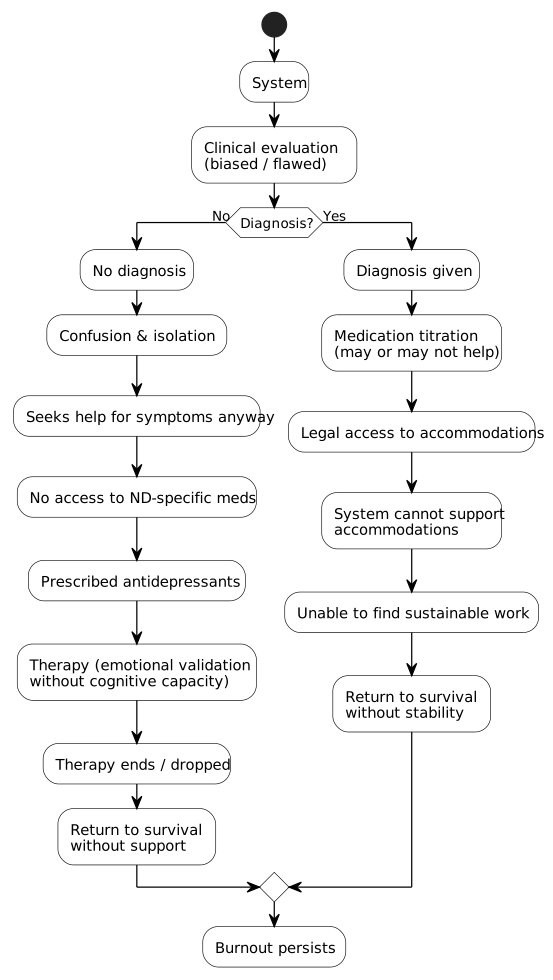
At a macro level, neurodivergent individuals are funneled into two apparent pathways — neither of which reliably leads to stability.
Without Diagnosis
When neurodivergence is missed or dismissed:
- individuals experience confusion, self-doubt, and isolation
- they still seek help, but only for surface-level symptoms
- treatment typically involves antidepressants and short-term therapy
These interventions may provide emotional validation, but often fail to address:
- cognitive overload
- executive dysfunction
- sensory processing differences
When treatment does not lead to functional recovery, care is withdrawn — and the individual is returned to survival mode without structural support.
With Diagnosis
Diagnosis appears to offer resolution, but instead introduces another loop:
- medication is trialed, with variable or limited effectiveness
- legal access to accommodations is granted
- real-world systems remain unable or unwilling to implement them
As a result:
- employment remains inaccessible or unsustainable
- financial and housing instability persist
- burnout deepens despite formal recognition
Different entry point.
Same outcome.
The Micro Scale: The Lived Experience
On an individual level, this systemic failure is experienced as an exhausting cycle:
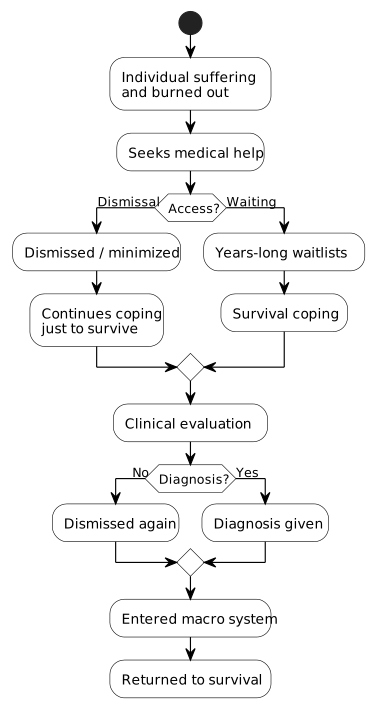
- a person reaches out while already struggling
- they encounter dismissal or years-long waiting lists
- they cope just enough to survive while waiting
- by the time evaluation occurs, capacity is already depleted
Regardless of whether diagnosis is ultimately granted, the individual is absorbed back into the same macro system — one that assumes a level of functioning burnout has already eroded.
Burnout is not caused by refusal to engage with care.
It is caused by being required to function before support is allowed to exist.
What Actually Helps (Within Reality)
There is no universal cure for neurodivergent burnout, but research and lived experience consistently point toward the same principles:
- Permission to pause: Rest does not need to be earned through collapse.
- Reduction of masking: Where safety allows, authenticity conserves energy.
- Predictable, sensory-aware routines: Stability reduces cognitive load.
- Community and recognition: Being believed mitigates isolation.
- Structural change: Individual resilience cannot compensate for systemic inaccessibility.
Burnout recovery is not about optimization.
It is about reducing harm.
A Final Reminder
🫂 Neurodivergent burnout is not a personal failure.
It is a rational response to prolonged unsupported demand.
You did not fail the system.
The system failed to support you.
This article is part of the Neurodivergence series on NeuroLight.
If this resonates, know that you are not alone — and that naming the problem is the first step toward changing it.